



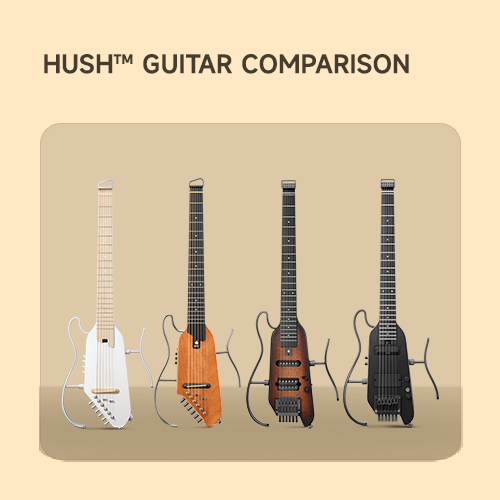
Salut à tous, chers guitaristes ! Parlons d'une révolution en matière de design qui a totalement conquis le paysage moderne de la guitare. Si vous remontez quelques décennies en arrière, la guitare headless (sans tête) était largement considérée comme une curiosité excentrique et futuriste — un élément visuel marquant des années 1980 que les traditionalistes balayaient souvent d'un revers de main.
Aujourd'hui, la donne a complètement changé. Regardez n'importe quel groupe de metal progressif moderne, de jazz fusion, ou même les guitaristes de pop et de rock en tournée, et vous verrez ces instruments élégants et minimalistes dominer la scène. Ce regain d'intérêt n'est pas juste une tendance visuelle passagère ; il est porté par des musiciens modernes qui exigent davantage de leur équipement. Les guitaristes d'aujourd'hui voyagent plus fréquemment, jouent des sets plus longs et physiquement exigeants, et enregistrent dans des home-studios de plus en plus exigus.

Si vous avez lorgné sur l'une de ces machines modernes mais que vous hésitez encore à rejoindre la révolution headless, vous avez besoin d'une vision d'ensemble pour faire un choix éclairé. Voyons exactement ce qui rend ces guitares spéciales, comment elles se comparent aux instruments classiques avec tête, et comment trouver celle qui conviendra parfaitement à votre équipement.
Guitare Headless vs Guitare Traditionnelle : Avantages et Inconvénients
L'abandon de la tête de manche change fondamentalement la sensation, l'équilibre et le fonctionnement d'une guitare. Bien que les avantages soient énormes pour les musiciens sur scène, il y a quelques particularités à connaître avant de sauter le pas. Voici le bilan ultime des points forts et des points faibles.
Les Avantages
-
Équilibre parfait et absence de "piqué du nez" : Nous connaissons tous cette sensation redoutée lorsque l'on lâche le manche de sa guitare une fraction de seconde, et que la lourde tête de manche entraîne agressivement l'instrument vers le sol. Ce déséquilibre force votre main gauche à soutenir inconsciemment la guitare pendant que vous jouez, provoquant une fatigue musculaire inutile. En déplaçant les lourdes mécaniques vers le chevalet, la guitare headless atteint une répartition des masses irréprochable. Elle repose parfaitement équilibrée contre votre corps, permettant à vos mains de se concentrer à 100 % sur le jeu.

-
Portabilité ultime sans aucun compromis : Quand on pense "guitare de voyage", on imagine souvent un petit instrument à diapason court qui ressemble davantage à un jouet. En supprimant la tête et en réduisant le corps, l'encombrement global d'une guitare headless diminue considérablement, la rendant incroyablement légère. La magie, cependant, réside dans le fait que le diapason (la longueur vibrante entre le chevalet et le sillet) reste exactement le même que sur une guitare standard. Vous retrouvez vos sensations de jeu habituelles dans un format compact qui se glisse facilement dans les métros bondés ou les coffres à bagages des avions.

-
Stabilité d'accordage de haut niveau : Les têtes de manche traditionnelles ont un défaut majeur : les cordes doivent s'écarter selon des angles prononcés pour atteindre les mécaniques. Cela crée une friction importante au niveau du sillet, ce qui peut facilement provoquer des blocages et vous désaccorder lors de gros bends. Une guitare headless utilise une tension des cordes parfaitement rectiligne. Les cordes sont fermement bloquées en haut et accordées directement au niveau du chevalet. Cela élimine totalement la friction du sillet, offrant une stabilité d'accordage à toute épreuve, même pour les styles de jeu les plus agressifs.

Les Inconvénients
-
Un petit temps d'adaptation pour la mémoire musculaire : Si vous avez joué sur des guitares traditionnelles toute votre vie, votre cerveau a pris l'habitude de monter vers la tête de manche pour s'accorder. Lorsque vous passez pour la première fois à un modèle headless, vous chercherez inévitablement des mécaniques qui ne sont plus là en plein milieu d'un morceau. Il faut quelques semaines de pratique pour rééduquer votre mémoire musculaire et viser désormais le chevalet !
-
Le dilemme de l'exposition : C'est un inconvénient purement pratique. Les supports muraux standards pour guitare reposent sur la forme élargie de la tête pour maintenir l'instrument en toute sécurité. Si vous souhaitez exposer votre nouvelle guitare headless au mur de votre studio, vous devrez investir dans des supports muraux spécialisés qui maintiennent le corps de la guitare ou acheter un pied au sol dédié.
-
Une esthétique clivante : L'aspect visuel est très subjectif. Bien que de nombreux musiciens adorent le look audacieux, futuriste et minimaliste d'une guitare headless, les traditionalistes purs et durs trouvent souvent que l'instrument semble "incomplet" ou qu'il manque de charme vintage.

Comment choisir la bonne guitare headless
Si les avantages vous ont convaincu, l'étape suivante consiste à trouver le modèle idéal. Comme ces guitares reposent largement sur leur accastillage spécifique, vous ne pouvez pas simplement acheter la première venue. Lorsque vous cherchez une guitare headless, gardez ces trois facteurs cruciaux à l'esprit :
-
Examinez le système d'accastillage : Comme le chevalet sert à la fois d'ancrage et de système d'accordage complet, il s'agit de la partie la plus importante de l'instrument. Recherchez des guitares équipées de chevalets à blocage de haute qualité et de boutons d'accordage de précision. Les boutons doivent tourner avec souplesse, sans résistance excessive ; s'ils semblent très durs ou granuleux, l'accordage deviendra une corvée.
-
Vérifiez le nombre de frettes et le matériau : Beaucoup de guitares traditionnelles s'arrêtent à 21 ou 22 frettes. Cependant, comme les guitares headless présentent naturellement des cutaways plus profonds et un meilleur accès aux frettes aiguës grâce à leurs corps ergonomiques, vous devriez viser un manche de 24 frettes. Cela ouvre une gamme complète de quatre octaves pour vos solos dans les aigus. De plus, recherchez des matériaux de frettes durables comme l'alliage nickel-argent pour résister à des années de jeu.
-
Évaluez les contours du corps : L'attrait principal du headless est le confort physique. Recherchez des découpes généreuses pour le ventre, des chanfreins pour l'avant-bras et un corps bien conçu. Un bon instrument headless doit épouser parfaitement votre morphologie, que vous soyez debout sur scène ou confortablement assis en studio avec la guitare posée sur votre jambe.
Le best-seller : Découvrez la Donner HLX-500
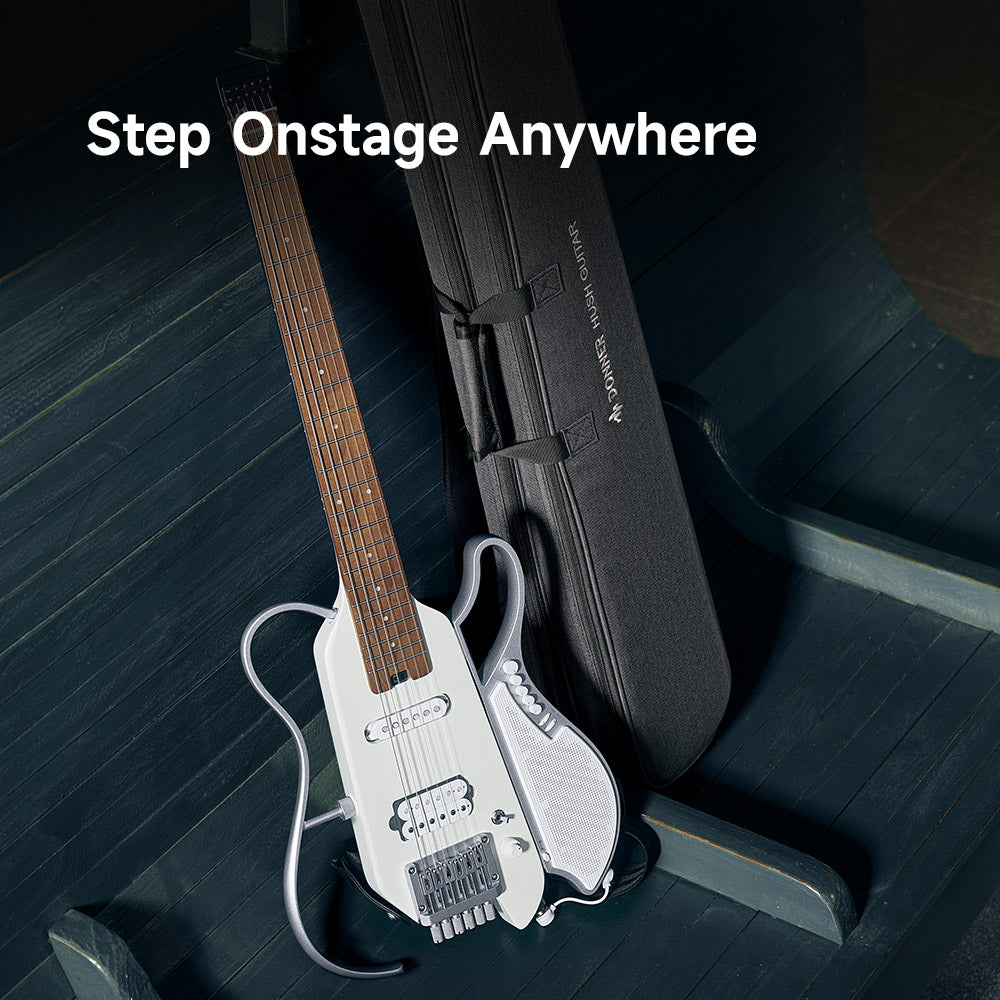
Avec autant d'options sur le marché, trouver un instrument qui coche toutes ces cases peut s'avérer intimidant. Heureusement, la guitare headless Donner HLX-500 se vend incroyablement bien précisément parce qu'elle réussit l'équilibre parfait entre performance professionnelle et excellent rapport qualité-prix. D'ailleurs, face à une très forte demande, Donner vient de lancer deux nouveaux coloris superbes pour ce modèle : Rouge et Vert.

-
Design ultra-portable : Compacte, légère et headless — votre instrument de prédilection pour voyager, les jams en extérieur et les trajets quotidiens.
-
Équilibre et confort parfaits : Conçue ergonomiquement pour éliminer le "piqué du nez", assurant une répartition égale du poids pour un jeu sans fatigue, sur scène ou en studio.
-
Accordage infaillible : Un chevalet à blocage premium et un système d'accordage de précision maintiennent la guitare parfaitement accordée, résistant sans mal aux styles de jeu agressifs et aux transports fréquents.
-
24 frettes pour un potentiel illimité : Équipée de frettes durables en alliage nickel-argent, elle dépasse les 22 frettes standards pour offrir une gamme complète de quatre octaves pour vos solos.
-
Prête pour la scène et le studio : Une bête de somme fiable qui délivre un son riche et constant, avec une structure solide testée pour la route dans n'importe quel environnement créatif.
-
Esthétique moderne : Une silhouette minimaliste et futuriste, pensée pour les musiciens recherchant à la fois des performances haut de gamme et une forte identité visuelle.
-
Housse intelligente : Inclut une housse antichoc avec des éléments réfléchissants de sécurité, des poches spacieuses et des bretelles de sac à dos convertibles pour une protection optimale lors de vos déplacements.
La révolution headless est en marche, et elle a pour unique but de rendre votre vie de musicien plus facile, plus confortable et plus inspirante. Optez pour la Donner HLX-500, débarrassez-vous du superflu et libérez votre vrai potentiel de jeu !