



La semaine d'emménagement dans une résidence universitaire canadienne apporte son lot de questions : tout va-t-il tenir ? Que signifient vraiment les heures de tranquillité ? Et la guitare peut-elle faire partie du voyage ? Avec des colocataires, des murs fins et un espace de rangement limité, ces inquiétudes sont tout à fait légitimes. Alors, devriez-vous apporter une guitare électrique à l'université ? La réponse courte est oui — avec un équipement adapté au casque audio et une vérification rapide du règlement de votre résidence, vous pourrez continuer à jouer sans que cela devienne une nuisance sonore.
Les étudiants qui apportent une guitare à l'université affirment souvent que ce passe-temps en vaut la peine pour évacuer le stress et garder le rythme. Une guitare électrique utilisée avec un casque est l'option silencieuse recommandée par les étudiants pour la vie en colocation, et elle s'adapte parfaitement aux petites chambres. Les heures de tranquillité et les règles concernant les instruments varient selon l'établissement et le bâtiment ; vérifiez-les donc avant de jouer tard le soir.
L'installation décrite ci-dessous vous explique comment pratiquer en silence. De plus, comme Donner propose actuellement des soldes pour la rentrée, trois de leurs guitares électriques sont adaptées à différentes situations en dortoir pour vous aider à choisir.
Oui, apportez-la — prévoyez d'abord l'équipement
Oui, apportez la guitare. La décision devient facile à gérer si vous planifiez l'équipement : pratiquez au casque, gardez votre matériel compact et facile à ranger, et vérifiez le règlement de votre résidence. Le principal conseil est de laisser les gros amplificateurs à la maison, car un ampli casque, une guitare avec sortie casque ou une interface audio pour ordinateur permettent de pratiquer en privé.
- Pratiquez avec un casque audio.
- Gardez une configuration compacte et facile à ranger.
- Vérifiez le règlement de la résidence avant de jouer tard.
Le point encourageant : les étudiants rapportent souvent qu'une guitare dans sa housse se glisse sous un lit ou dans un placard, même dans une petite chambre de dortoir. L'espace est rarement l'obstacle insurmontable qu'il semble être.
Comment fonctionne une configuration silencieuse pour guitare électrique
L'idée est simple : déplacer le son de la pièce vers vos oreilles. Avec un casque, seul le musicien entend le son, c'est pourquoi une guitare électrique est un choix plus facile en dortoir qu'une guitare acoustique bruyante ou un amplificateur poussé à fond. Trois solutions couvrent la plupart des besoins, et vous pouvez les combiner.
- Casque avec ampli casque : un petit ampli avec une prise casque permet des sessions privées sans haut-parleur encombrant.
- Guitare avec sortie casque : certaines guitares électriques intègrent une prise casque pour brancher directement votre appareil et pratiquer en toute discrétion.
- Interface audio pour ordinateur portable ou téléphone : branchez la guitare via l'interface et jouez avec un casque pour garder le son privé.
Les habitudes comptent autant que le matériel. Mettez-vous d'accord sur des plages horaires de pratique avec votre colocataire, gardez le volume bas et utilisez une salle de pratique si votre campus en propose — elles existent sur de nombreux campus et permettent de jouer plus fort, mais l'offre varie selon l'établissement, renseignez-vous sur ce qui est disponible.
Ce qu'il faut vérifier avant de faire vos bagages
Quelques vérifications rapides avant l'emménagement transforment une hésitation en un plan concret. Chacune nécessite une étape simple.
- Règlement sur le bruit et heures de tranquillité : les contrats de résidence définissent souvent ces règles ainsi que la politique sur les instruments, et il est de votre responsabilité de les vérifier. Lisez votre contrat ou le manuel de la résidence avant de jouer tard.
- Accord avec le colocataire : discutez rapidement des temps de pratique et du volume. Une configuration au casque facilite la discussion, mais ne remplace pas une entente sur le fonctionnement de la vie en chambre.
- Rangement : une housse ou un étui protège la guitare pendant l'emménagement et le rangement durant le trimestre, et il se glisse facilement sous un lit ou dans un placard.
- Quelle guitare apporter : pour la première année, envisagez d'apporter une guitare que vous pouvez vous permettre de remplacer et laissez les modèles de grande valeur ou sentimentaux à la maison.
Chaque configuration ci-dessous est adaptée à une situation de dortoir différente, et les trois font partie des soldes actuelles de rentrée. Si vous souhaitez comparer davantage, parcourez la gamme complète des guitares électriques.
Kit guitare électrique Donner DST-152 HSS avec coil split Le meilleur kit de démarrage tout-en-un

Caractéristiques
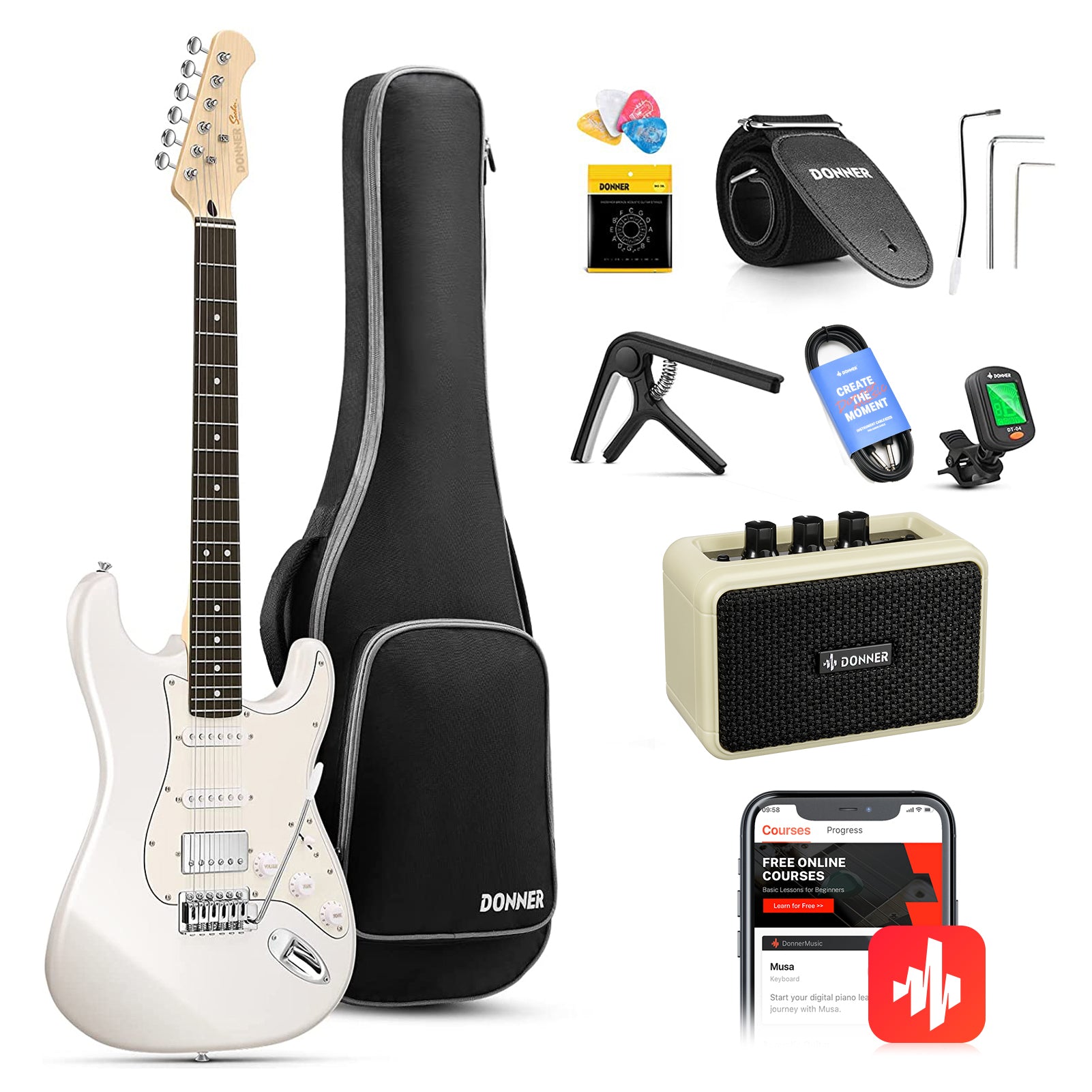
- Le kit comprend un amplificateur, une housse, un capodastre, une sangle, des cordes, un accordeur, un câble et des médiators.
- Micros HSS avec coil split (push-pull) et sélection de micro 7 modes pour des sonorités polyvalentes.
Pour l'étudiant qui veut être opérationnel dès le jour de l'emménagement, le Kit guitare électrique Donner DST-152 HSS avec coil split est un point de départ complet — amplificateur, housse, capodastre, sangle, cordes, accordeur, câble et médiators sont inclus — afin que vous puissiez jouer dès votre arrivée sans faire d'autres achats. Les micros HSS avec coil split et la sélection 7 modes vous offrent une large palette de sons pour progresser tout au long de l'année. Pour une pratique silencieuse, branchez la guitare sur votre propre ampli casque ou interface audio et gardez l'amplificateur pour les moments où vous pouvez jouer plus fort.
Guitare électrique headless Donner HLX-500 La meilleure guitare électrique compacte

Caractéristiques
- Design sans tête (headless) avec système de blocage et accordage au chevalet pour une taille compacte.
- Micros SSH avec profil de manche asymétrique progressif ; housse rembourrée sur mesure, sangle et médiator inclus.
La guitare électrique headless Donner HLX-500 convient à l'étudiant disposant d'une petite chambre de dortoir qui souhaite une guitare électrique complète occupant moins d'espace et facile à ranger. Le design sans tête avec système d'accordage au chevalet maintient le corps compact pour le rangement, et la configuration de micros SSH avec profil de manche asymétrique complète le tout. Une housse rembourrée sur mesure, une sangle et un médiator sont inclus pour protéger votre guitare entre les sessions de pratique.
Guitare électrique de voyage Donner HUSH X Le meilleur équipement pour pratiquer au casque

Caractéristiques
- Sortie casque 3,5 mm permettant une pratique silencieuse, plus une prise de sortie jack 6,35 mm.
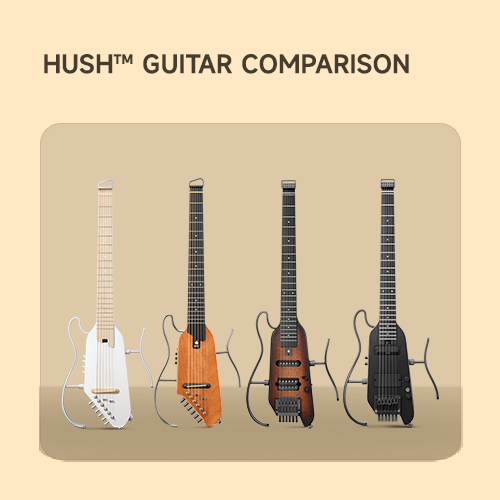
- Corps headless de 2 kg, environ deux fois plus petit qu'une guitare électrique traditionnelle, avec cadre détachable pour un rangement compact.
- Le kit comprend une housse de voyage de luxe, des écouteurs, une sangle, un accordeur, des médiators et des câbles.
Si la pratique silencieuse au casque est la priorité, la guitare électrique de voyage Donner HUSH X garde le son dans vos oreilles plutôt que dans la pièce. Une sortie casque 3,5 mm permet de pratiquer en silence, tandis qu'une prise jack 6,35 mm est disponible si vous souhaitez vous brancher ailleurs. Son corps headless de 2 kg — environ deux fois plus petit qu'une guitare électrique traditionnelle — est facile à transporter entre la maison et la résidence, et le cadre détachable permet un rangement ultra-compact. Le kit inclut une housse de voyage de luxe, des écouteurs, une sangle, un accordeur, des médiators et des câbles.
FAQ sur la guitare à l'université
Ai-je besoin d'un amplificateur pour pratiquer la guitare électrique à l'université ? Pas nécessairement. Un ampli casque, une guitare avec sortie casque ou une interface audio pour ordinateur vous permettent de pratiquer en privé sans gros amplificateur. Si vous en possédez déjà un, gardez-le pour la journée ou utilisez les salles de pratique. Étape suivante : choisissez l'option silencieuse adaptée à votre matériel actuel, puis décidez de ce que vous emporterez.
Jouer avec un casque empêchera-t-il vraiment mon colocataire de m'entendre ? Avec un casque, le son arrive directement à vos oreilles au lieu de se diffuser dans la pièce ; le bruit perçu par votre colocataire est donc nettement inférieur à celui d'un amplificateur. Ce n'est pas une garantie de silence total — le bruit des cordes et la finesse des murs jouent un rôle — mais c'est la solution la plus silencieuse couramment utilisée. Étape suivante : convenez de plages horaires de pratique et gardez le volume bas pour maintenir une bonne entente.
Que faire si ma résidence a des règles concernant les instruments de musique ? Les accords de résidence définissent souvent les heures de tranquillité et la politique relative aux instruments, et les règles varient d'un établissement à l'autre. Lisez votre contrat de résidence, demandez conseil à l'accueil ou au conseiller en résidence, et utilisez les salles de pratique si votre campus en propose. Étape suivante : vérifiez le manuel de la résidence avant votre arrivée pour savoir exactement ce qui est autorisé.
Facilitez votre emménagement : apportez votre guitare, restez silencieux
La semaine d'emménagement contient déjà assez de décisions à prendre pour ne pas faire de votre guitare une source de stress. Avec une configuration adaptée au casque, un rangement compact et un coup d'œil rapide aux règles de votre résidence, votre passion peut vous accompagner — et rester la bienvenue dans une chambre partagée. Avant de faire vos cartons, examinez les trois configurations ci-dessus et les offres de rentrée actuelles pour trouver celle qui correspond à votre dortoir, puis profitez de votre première session de pratique en toute tranquillité pour le semestre.