






You can play both bars separately, yet the bass still comes in late when you cross the bar line. Make that join the job for today. Spend two minutes on the left-hand move, three finding what breaks, seven repairing the join, two testing it in context and one writing down where to start tomorrow.
The 15-Minute Piano Routine
- Find the Beat Where Your Hands Stop Lining Up
- The 15-Minute Plan for a Clean Beat One
- 0–2 Minutes: Put the Left Hand in Position Before Beat One
- 2–5 Minutes: Find Out Whether the Rhythm or the Left Hand Is Late
- 5–12 Minutes: Build the Landing One Note at a Time
- 12–14 Minutes: Test the Join From the Previous Beat
- 14–15 Minutes: Write Tomorrow’s First Attempt
- When to Keep the Same Join Tomorrow
- Common Questions
Find the Beat Where Your Hands Stop Lining Up
Here is a two-bar example in 4/4. The right hand plays E and F as two eighth notes on “4 and” in bar 7, then G on beat 1 of bar 8. The left hand waits through bar 7 and plays C on beat 1 of bar 8. Count “four-and-ONE”: E on “four,” F on “and,” then right-hand G and left-hand C together on “one.” Use any comfortable G and a C below it. Release after the landing for now; the exercise is about the attack, not the pedal.
Try the join once without stopping to fix it. Did F disappear? Did the left hand land after G? Or did both notes land together after a pause? Those are different problems. Circle the first beat of bar 8 and work on just one of them.

The 15-Minute Plan for a Clean Beat One
| Time | What to do | Move on when… |
|---|---|---|
| 0–2 min | Prepare left-hand C | C lands on the spoken “one.” |
| 2–5 min | Test the right-hand rhythm and the left-hand tap | You know which part makes the entrance late. |
| 5–12 min | Build G+C, then F → G+C, then E–F → G+C | Two tries keep both notes together and the beat steady. |
| 12–14 min | Start from beat 3 and continue to beat 2 of the next bar | The join holds with a lead-in and an exit. |
| 14–15 min | Write the next starting beat and action | Tomorrow’s first try is already decided. |
0–2 Minutes: Put the Left Hand in Position Before Beat One
Without playing the right hand, count one full bar in a steady voice. Move the left hand over C before beat 4, but don’t press it yet. Play C on the next “one.” If the hand arrives and presses at the same moment, move it earlier on the next try. The warm-up is done when you can wait above C and play it without interrupting your count.

2–5 Minutes: Find Out Whether the Rhythm or the Left Hand Is Late
Tap “four-and-ONE” with the right hand, then play E–F–G alone over the same count. If the “and” disappears, keep the left hand out and restore that subdivision. If E–F–G is even but the bass enters late when you add it, replace the left-hand C with a tap on your thigh on “one.” If the tap is on time and the note isn’t, prepare the left-hand position earlier. If even the tap is late, practice the tap with the spoken count before returning to the keys.

5–12 Minutes: Build the Landing One Note at a Time
Start with the landing: play right-hand G and left-hand C together on “one,” then release. Next play right-hand F on “and,” followed by both notes on “one.” Once that works, restore E on “four.” Keep the count going between attempts so you hear whether you added an extra beat. If adding E makes the bass late again, return to F → G+C.
Use two clean attempts in a row as a checkpoint before expanding. Clean means F is present, G and C start together, and “and” to “one” takes no longer than “four” to “and.” If you miss the checkpoint, reduce the excerpt or slow the pulse enough to count comfortably. Keep the same fingering rather than solving a different problem on each attempt.

12–14 Minutes: Test the Join From the Previous Beat
Start on beat 3 of bar 7, count the lead-in, play E–F into G+C, then continue counting to beat 2 of bar 8. Do this at the speed you used in the drill. If you are using your own score, play its actual notes before and after the join.
If the landing holds in the tiny loop but fails from beat 3, mark beat 3 as the new starting point. The added lead-in is exposing the problem. If you land cleanly but stop immediately afterward, extend the loop to the next beat rather than going back to the beginning of the piece.

14–15 Minutes: Write Tomorrow’s First Attempt
Write the exact place, what held, and the next test. Example: “Bar 7, beat 4 → bar 8, beat 1: E and F both audible; G+C together twice. From beat 3, the bass was late. Tomorrow: start on beat 3 and move the left hand over C before beat 4.”
When to Keep the Same Join Tomorrow
Begin with one attempt from your note before doing the small loop again. If the join holds with the lead-in, extend the phrase by a beat or try a slightly faster pulse, one change at a time. If it still breaks, keep the same join and choose the drill that matches what failed. After a missed day, use the same note; you don’t owe the timer another 15 minutes.
Common Questions
Is 15 minutes a day enough to make progress?
Yes, for a target small enough to test. “Both hands land together from the previous beat” is useful progress even if the piece is far from finished. If a whole bar is too much, work on the pickup and landing alone.
Can I use a keyboard for this routine?
Yes, if the keyboard covers the notes in the passage. You can work on rhythm, note placement and coordination even on lighter keys. A shorter range or different resistance still matters when you return to a piece written for a full piano keyboard.
Beginner Digital Pianos for Daily Practice
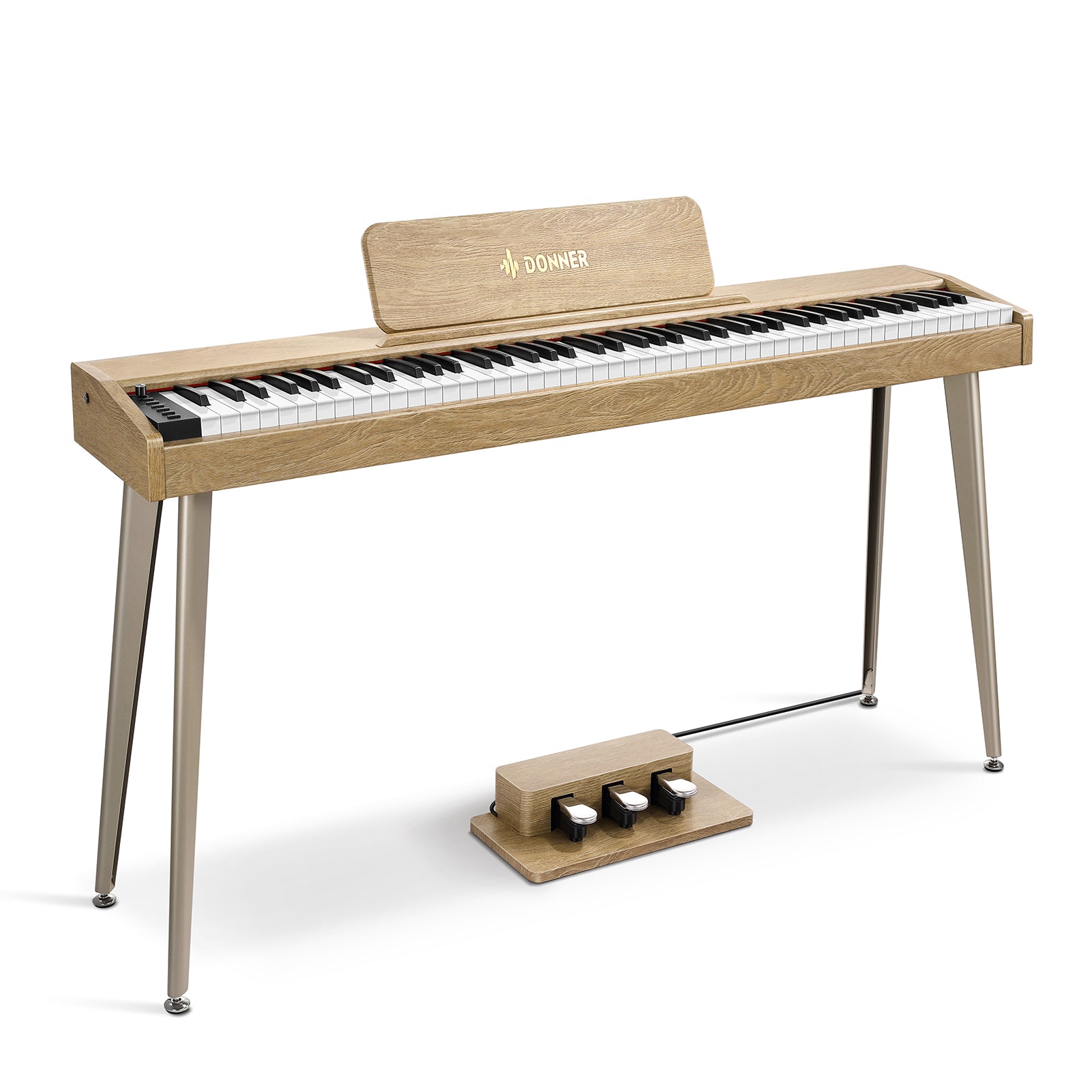
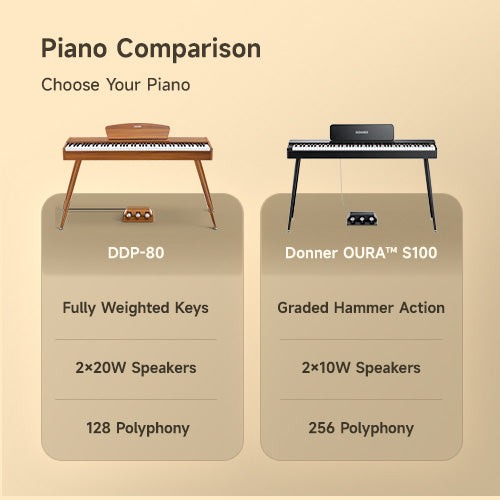
If your keyboard has the notes in the exercise, keep using it. If you need a piano, the Donner DEP-1S has semi-weighted keys. The hammer-action keys of the Donner DEP-20 let you practise landing G and C softly, then more firmly, without changing the count.
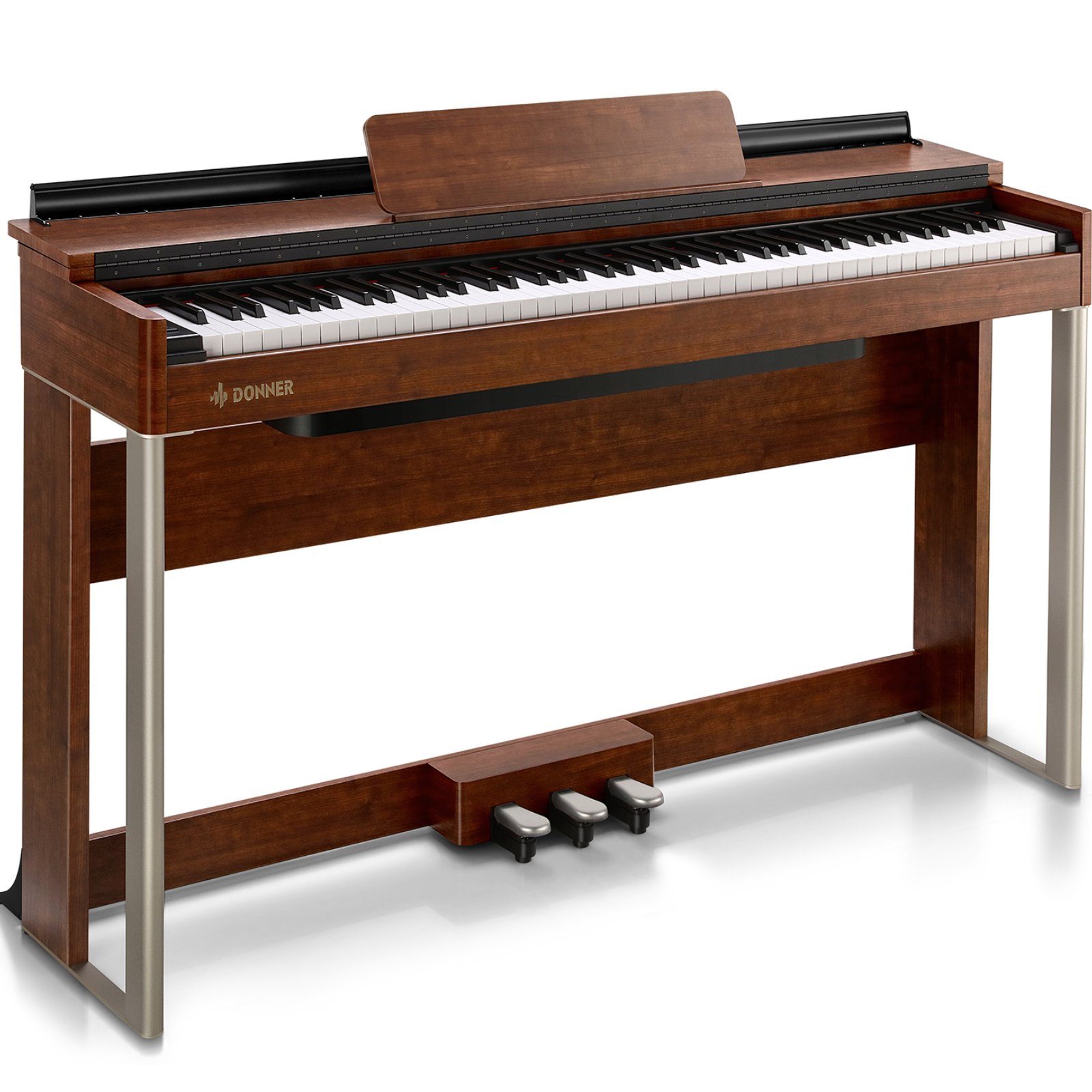
Donner DDP-75
A permanent practice spot at home
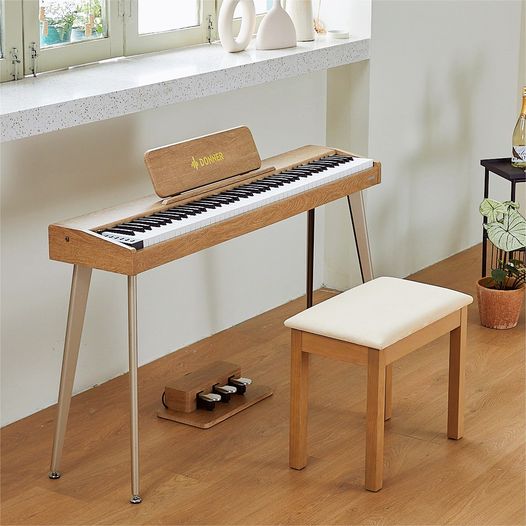
The Donner DDP-75 suits a spot you can leave set up. Keep your score nearby with tomorrow’s starting beat marked.
Pros
- Hammer-action keys for practising soft and firm attacks.
Cons
- The upright cabinet is less practical if you need to move the piano between rooms.
Make the Next Session Easy
At your next session, play from the mark you left before you restart the drill. Listen for the same three things: both pickup notes are there, the hands land together, and the beat doesn’t wait for them.