




An affordable piano is better value when the place around it works for regular practice. These six digital pianos offer different routes to a stable home station, from a furniture cabinet with pedals to an instrument on separate support.
For a shared family piano, seating, pedal reach and private listening deserve as much attention as extra sounds. The comparison also distinguishes physical hammer action from the lighter semi-weighted alternative, so a full 88-key range does not hide a different playing feel.
Six Pianos for a Practical Home Setup
- Donner DDP-200 MK2 for a Shared Piano Station
- Yamaha P-145BT for Practice With a Computer
- Donner DDP-80 for a Focused Daily Routine
- Roland FP-10 for Side-by-Side Piano Practice
- Donner DEP-1S for a Lighter Touch and Separate Stand
- Casio CDP-S110 for Flexible Placement
Compare Touch and Practice Setups
| Model | Action | Selected Setup | Sound Range | Price |
|---|---|---|---|---|
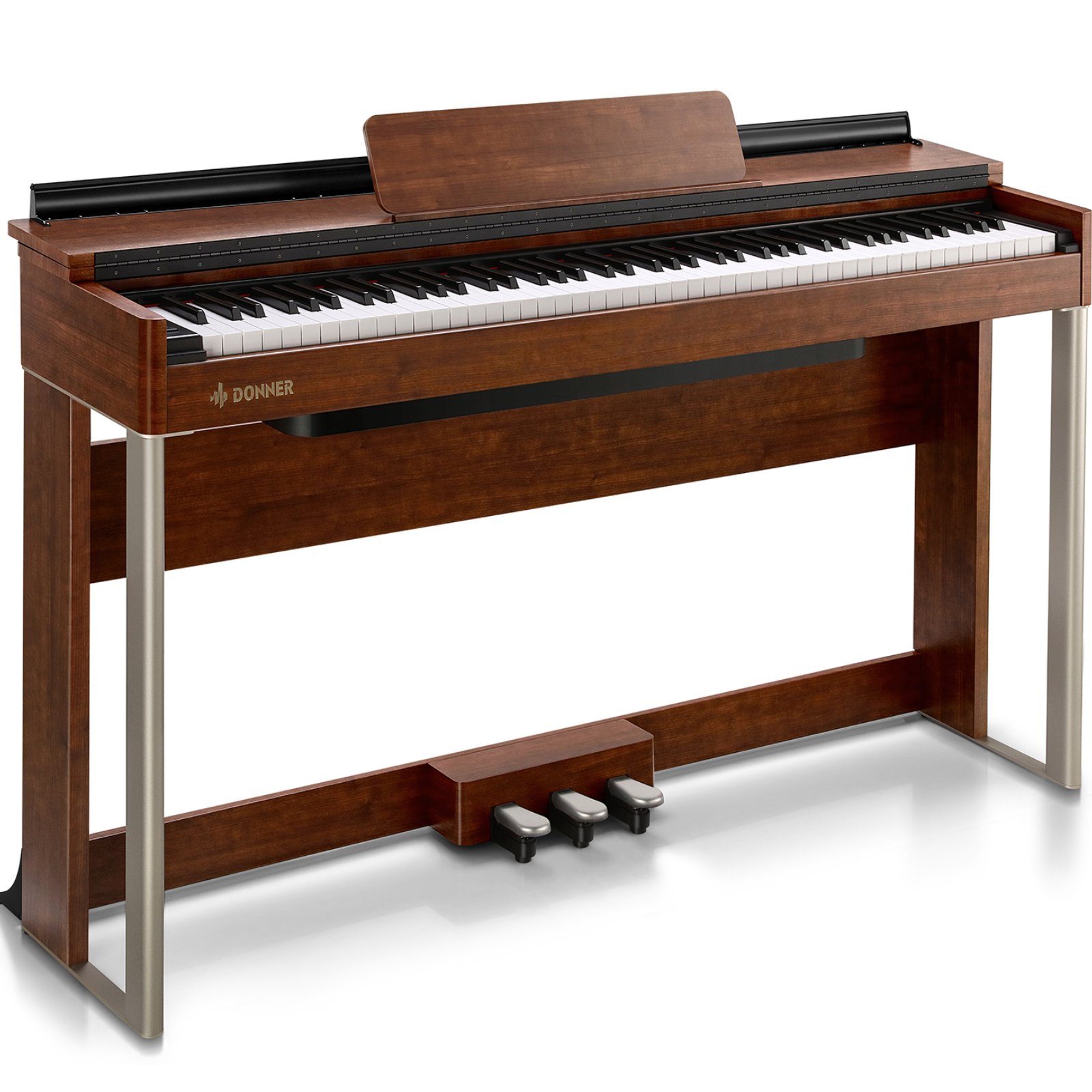
| Donner DDP-200 MK2 digital piano | 88 graded hammer-action keys | Furniture stand; three pedals | 15 voices | CAD 899.99 |
| Yamaha P-145BT | 88 graded hammer-action keys | Portable body; support separate; pedal switch | 10 voices | — |
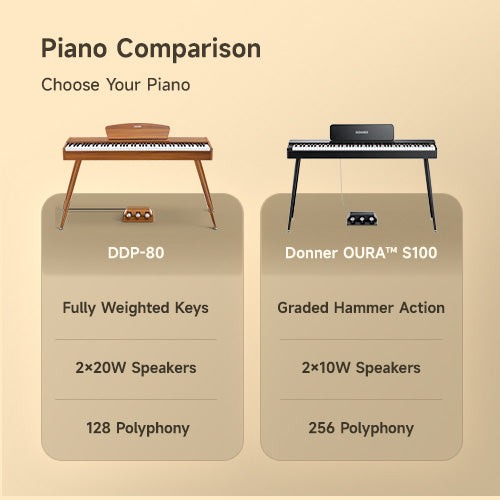
| Donner DDP-80 digital piano | 88 graded hammer-action keys | Furniture stand; three pedals | 6 voices | CAD 605.99 |
| Roland FP-10 | 88 graded hammer-action keys | Portable body; support separate; pedal switch | 15 voices | — |
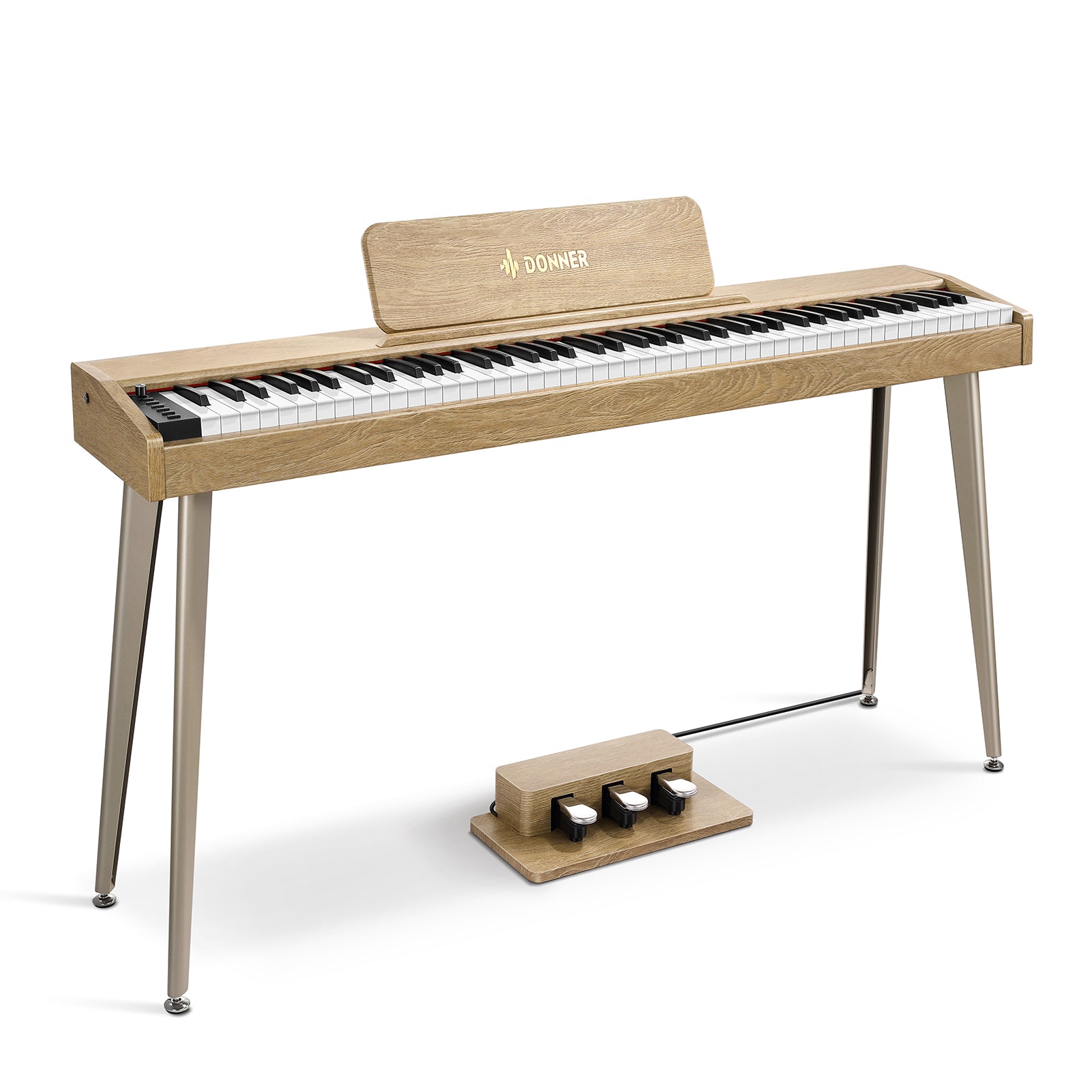
| Donner DEP-1S digital piano | 88 semi-weighted keys | X-style stand; sustain pedal | 128 voices | CAD 259.99 |
| Casio CDP-S110 | 88 graded hammer-action keys | Portable body; support separate | 10 voices | — |
Prices refer to the selected configurations. A dash indicates that no price is stated in this comparison.
Donner DDP-200 MK2 Dedicated Piano Station

Pros
- Graded hammer action
- Three-pedal furniture setup
Cons
- 34.5 kg furniture instrument
Donner DDP-200 MK2 digital piano suits a dedicated home station, especially when a learner and another listener share practice. Its 88-key graded hammer action varies resistance across the keyboard and includes a simulated point of resistance in the key movement, while an equal-range teaching mode lets two players work within a comparable register.
Two 6.35 mm headphone jacks allow both people to listen privately and bypass the internal speakers when headphones are inserted. The MK2 configuration includes the furniture support, anti-tip brackets and triple-pedal assembly. At 34.5 kg, it is a furniture instrument to place deliberately rather than move after each session.
For a shared family station, the two listening outputs and same-register mode give the equipment a purpose beyond a high key count.
Yamaha P-145BT Compact Connected Practice
Pros
- GHC hammer action
- USB audio and MIDI
Cons
- Furniture stand sold separately
Yamaha P-145BT digital piano suits a player who wants graded hammer action in a separate body. Its 88-key GHC mechanism uses graded weighting, with resistance varying across the keyboard, and the 11.1 kg body lets you plan the instrument and support as separate parts of the room arrangement.
The CFIIIS piano voice sits within a selection of 10 sounds. USB audio and MIDI support different computer tasks, while Bluetooth audio input is for receiving sound, not proof of wireless headphone output. Count a stand and any compatible three-pedal upgrade separately; the supplied footswitch is a different pedal arrangement.
Donner DDP-80 Simple Daily Piano Playing

Pros
- Weighted graded action
- Three-pedal unit
Cons
- Function changes use key combinations
Donner DDP-80 digital piano is a permanent piano setup for a player who values a focused selection over a workstation-style panel. Its 88 graded hammer-action keys provide physical weighting, and six tones leave room for some variety without an extensive sound menu.
The standard box lists the stand parts and three-pedal unit; the piano-only option excludes a bench. USB-MIDI sends playing information, while AUX output carries the instrument’s sound. Some function changes use pedal-and-key combinations, so the uncluttered controls are worth trying as a routine, not just judging by appearance.
This route makes sense when family members take turns at a piano that can remain assembled.
Roland FP-10 Piano Touch in Less Space
Pros
- PHA-4 Standard action
- Twin Piano practice mode
Cons
- Furniture stand sold separately
Roland FP-10 digital piano puts the emphasis on the keyboard mechanism rather than an included cabinet. The 88-key PHA-4 Standard action combines graded weighting with escapement, a simulated point of resistance in the key movement. Twin Piano provides a same-register layout for shared practice.
The 12.3 kg body and supplied pedal switch still need suitable support. A stand and the compatible DP-10 half-pedal accessory are separate choices. USB-MIDI sends performance information; Bluetooth MIDI availability depends on the market version. The panel provides 15 tones, with additional sounds accessed through a compatible app.
Donner DEP-1S Flexible First Setup

Pros
- Full 88-key range
- Adjustable X-style stand
Cons
- Semi-weighted rather than hammer action
Donner DEP-1S digital piano combines the full 88-key range with a lighter, semi-weighted action. Velocity sensitivity and five touch-response levels let the sound react to how you play, but those settings do not turn the mechanism into hammer action. It is a deliberate compromise for chords, songs and a flexible first setup.
The standard kit lists an adjustable double-X stand, sustain pedal, music rest and adapter. Its 128 tones and 100 rhythms support exploring songs, while a metronome and internal note recording/playback give you ways to practise and listen back. The separate support allows a different room arrangement from a furniture piano.
For a shared room, the separate support offers flexibility; each player still needs a comfortable seat and pedal reach.
Casio CDP-S110 Portable Battery-Powered Practice
Pros
- Hammer-action keyboard
- Six-AA battery operation
Cons
- Furniture stand sold separately
Casio CDP-S110 digital piano is a practical alternative when the playing location changes. Its 88-key Scaled Hammer Action Keyboard II retains a hammer-action mechanism in a body 232 mm deep and weighing 10.5 kg without batteries.
The specified adapter or six AA alkaline batteries provide separate power options. Ten tones keep the selection relatively focused; USB-MIDI carries performance data, and the combined headphones/output socket provides an audio route. A furniture stand is separate, so battery operation solves the power question rather than the whole support and seating arrangement.
Make the Setup Work Beyond the First Week
Picture the piano after the excitement of the first day: someone needs to sit down, reach the pedals and hear clearly. That everyday arrangement is where the following choices earn their value.
Build a Comfortable Shared Practice Place
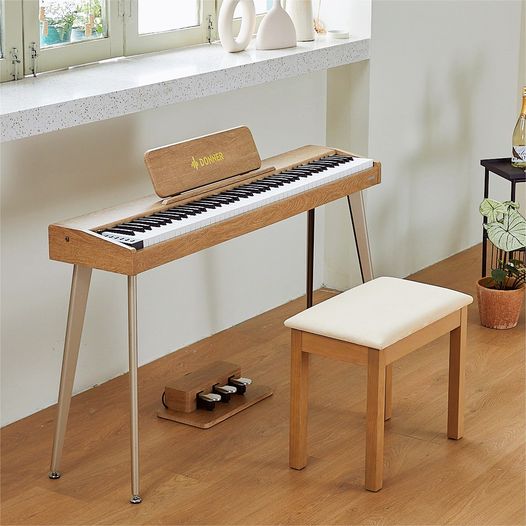
Suppose two members of a household take turns practising. The same seat position may not suit both, and the pedal must remain reachable when the player changes. A fixed cabinet keeps the instrument in place; a separate keyboard and stand gives you another way to arrange the room.
Try each player's seated position with the actual support and seat. Adjustability is a feature to verify on those items, not something every bench or stand provides.
Choose the Pedal Route Before Extras
A basic sustain switch turns sustain on and off. A half-pedal system can respond to intermediate pedal positions, but it needs support from the piano and compatible pedal hardware. A three-pedal unit adds controls; its pedal count does not establish progressive sustain sensing.
Choose the pedal route your music and lessons call for before paying for unrelated extras. Include the compatible accessory in the complete setup if it is separate.
Listen Through Speakers and Headphones
Play a quiet melody and hold a chord through the speakers, then listen through the headphones you plan to use. Keep both at comfortable levels. You are comparing how that sound reaches you during practice, not the size of the sound library.
For two private listeners, count the actual headphone outputs and consider where both people will sit. That can be more useful in a shared practice place than another group of voices.
Practical Questions Before Buying
Will an Affordable Digital Piano Need Tuning?
No regular string tuning is needed because the piano generates its sound electronically. That does not mean every maintenance issue is a tuning problem: an uneven key, faulty pedal or damaged adapter needs its own diagnosis.
Does Bluetooth Mean I Can Use Wireless Headphones?
No. Bluetooth audio input, Bluetooth MIDI and headphone audio transmission are different functions. A model advertising one does not establish the others. For dependable private practice, use the headphone connection described for that exact piano.
Do Two Players Need Two Headphone Outputs?
Two headphone outputs are convenient when both people need to hear the piano privately. A shared-output adaptor is a separate compatibility and volume-control decision, not an equivalent feature automatically supplied with a single-jack instrument.
Make Daily Practice the Better Value
The better-value choice is the piano that lets each player sit comfortably, reach the pedals and hear what they are doing. Settle that shared arrangement first, then choose the action and functions you will actually use. Confirm the precise package contents against the equipment you still need.